

Last Updated: October 23, 2026
Quick Summary
A wedding day emergency kit is a collection of essential items to handle common wedding-day mishaps quickly and discreetly, from makeup smudges to wardrobe malfunctions, so you stay composed and camera-ready. The key to an effective kit is thinking ahead, as most couples discover too late that simple items like safety pins, stain remover pens, or pain relief tablets would have saved them stress.
- Pack at least 10-15 safety pins and 15-20 bobby pins in your hair color for wardrobe and hair emergencies.
- Designate one person like the maid of honor to carry the main kit while the bride carries a smaller personal kit with most-needed items.
- Include pain relievers, blister plasters, antibiotic ointment, and antihistamine tablets for first aid and physical discomfort.
- Organize items into labeled ziplock bags by category so you can find essentials quickly without dumping everything out.
- For outdoor weddings, prioritize sunscreen SPF 30 or higher, extra bobby pins for wind, and insect repellent spray.
Table of Contents
- What to Put in a Wedding Day Emergency Kit
- Wedding Emergency Kit Essentials by Setting and Season
- Bridal Emergency Kit Checklist: Printable Essentials
- Wedding Day Emergency Kit Printable: Organization and Ownership
- Safe Use of Medications and Allergy-Aware Alternatives
- Emergency Response and When to Escalate
- Frequently Asked Questions
What to Put in a Wedding Day Emergency Kit
A wedding day emergency kit is a collection of essential items to handle common wedding-day mishaps quickly and discreetly, from makeup smudges to wardrobe malfunctions, so you stay composed and camera-ready.
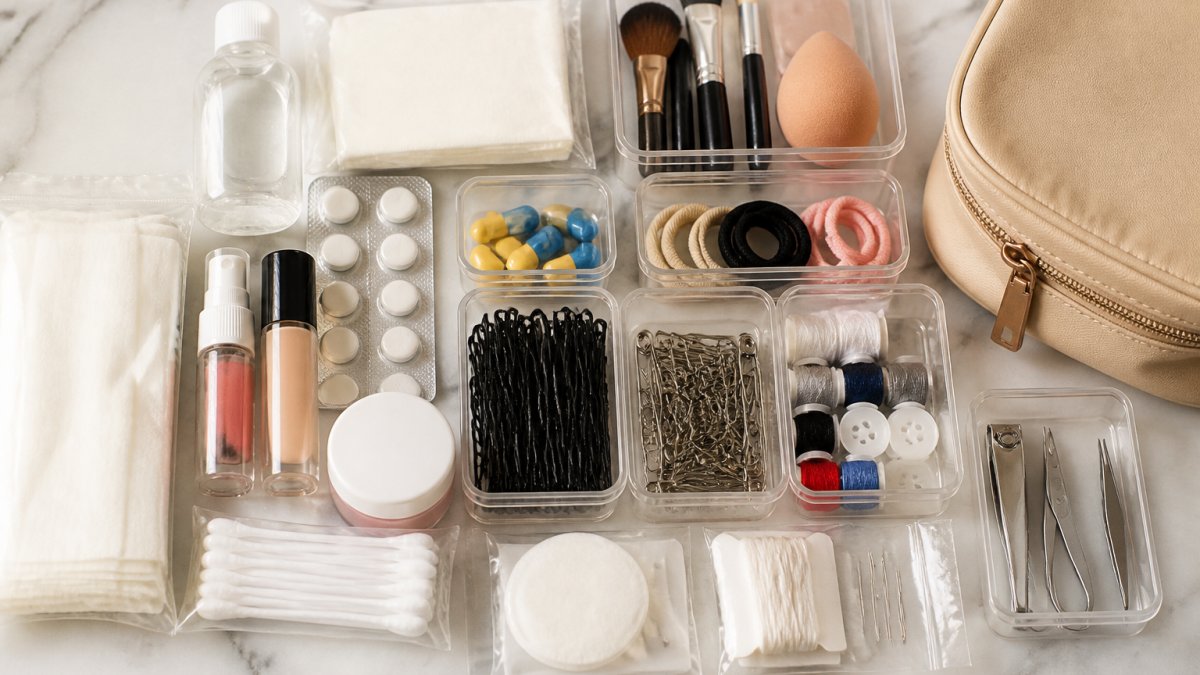
The key to an effective wedding day emergency kit is thinking ahead. Most couples discover too late that a simple safety pin, stain remover pen, or pain relief tablet would have saved them stress and expense.
Beauty and Makeup Touch-Ups
Keep makeup fresh with a compact touch-up collection: blotting papers or face wipes for excess oil, and a small mirror that fits in a clutch or pocket.
Include these beauty essentials:
- Pressed powder or powder compact for touch-ups
- Lipstick or lip stain in your wedding shade
- Mascara for quick fixes
- Concealer to cover any blemishes or dark circles
Bring a small brush or sponge for blending, and a travel-size foundation stick instead of a full bottle. Many brides also pack extra false lashes or lash glue, since these can shift during the ceremony or reception.
Hair Care and Styling Fixes
Hair mishaps happen, especially during dancing and outdoor photos. Pack bobby pins in your hair color and a small comb or brush for flyaways and tangles.
Essential hair items include:
- Bobby pins (at least 10-15) in your hair shade
- Hair spray in a travel-size bottle
- Dry shampoo to refresh your style and add texture
- A small comb or detangling brush
Dry shampoo refreshes flat or oily hair instantly by the reception. For an updo, bring extra bobby pins and a small bottle of gel to tame stubborn pieces.
Wardrobe and Dress Repairs
Dress tears, popped seams, and loose buttons can happen. Pack a small sewing kit with white and neutral thread, a needle, and small scissors, plus safety pins to temporarily secure a torn hem or loose seam.
Include these wardrobe essentials:
- Sewing kit with needle, thread (white, black, and your dress color), and small scissors
- Safety pins (at least 5-10)
- Fashion tape or double-sided tape for securing fabric
- Hem tape for temporary hemming
Fashion tape keeps strapless dresses in place or secures a loose neckline, and superglue reattaches a heel tip or fixes jewelry. If you're wearing heels, bring a small heel repair kit or extra adhesive, since a broken heel mid-celebration is a genuine emergency.
First Aid and Pain Relief
Wedding days involve hours of standing, walking, and dancing. Pack pain relief for headaches, muscle aches, or cramps, plus bandages and blister plasters, since new shoes often cause blisters after a few hours.
Essential first aid items:
- Pain relievers (ibuprofen or acetaminophen) for headaches or general aches
- Antacid tablets for digestion issues or nerves
- Antihistamine tablets for allergic reactions or itching
- Blister plasters for foot pain
Keep pain relief tablets in their original containers. If you have allergies or sensitivities, bring your own medications rather than relying on others, including an antihistamine for unexpected reactions to flowers or food.
Personal Care and Hygiene
Long wedding days mean you'll need basic hygiene items: tissues for emotional moments or spills, face wipes to freshen up between photos, and breath mints or gum before close-up photos.
Essential personal care items:
- Tissues (travel-size pack)
- Face wipes or makeup remover wipes
- Deodorant (roll-on or stick)
- Breath mints or sugar-free gum
A small travel-size deodorant makes a big difference after hours of celebration, and hand sanitizer keeps your hands clean between photos and meals.
Wedding Emergency Kit Essentials by Setting and Season
Different venues and weather conditions require different preparations. A beach wedding faces different challenges than an indoor ballroom. Seasonal weather also affects what you'll need most.
Indoor Venue Adjustments
Indoor venues offer climate control, but air conditioning can be cold, so bring a small shawl or wrap.
Focus on these items for indoor venues:
- Extra deodorant (indoor venues can get warm with dancing)
- Static spray or fabric refresher for your dress
- Lint roller for pet hair or debris
- Tissues for emotional moments
Bring a small lint roller for pet hair, dust, or debris before photos, and static spray to stop your dress clinging to your body or other fabrics. Skip most weather-related items, but bring extra deodorant since dancing indoors gets warm quickly.
Outdoor Wedding Considerations
Outdoor weddings require extra preparation for sun, wind, and temperature changes: sunscreen to prevent burns and tan lines, extra bobby pins since wind loosens hair, and a small umbrella or rain jacket for unexpected showers.
Essential outdoor items:
- Sunscreen (SPF 30 or higher) for exposed skin (the American Academy of Dermatology)
- Extra bobby pins for wind protection
- Hat or fascinator with secure pins
- Small umbrella or rain jacket
Wind is the biggest challenge outdoors, so bring extra bobby pins and a stronger hair spray. Apply sunscreen before makeup and reapply after eating or swimming, and pack insect repellent for evening celebrations.
Seasonal Priorities
Spring and summer weddings require sun protection. Fall and winter weddings require warmth and moisture management.
Seasonal priorities:
| Season | Top Priority | Secondary Items |
|---|---|---|
| Spring | Allergy relief, sunscreen | Extra tissues, umbrella |
| Summer | Sunscreen, insect repellent, extra water | Deodorant, blotting papers |
| Fall | Moisturizer, static spray | Extra layers, lip balm |
| Winter | Hand warmers, moisturizer, lip balm | Extra deodorant, tissues |
Summer weddings demand sun protection and extra deodorant, spring weddings may require allergy medication, fall weddings need moisturizer for drier air, and winter weddings require hand warmers and extra lip balm.
Bridal Emergency Kit Checklist: Printable Essentials
A printable checklist groups items by category and priority, making it easy to verify you've packed everything.
Priority Items to Pack First
Start with items that address the most common and urgent problems. These are the essentials that solve 80% of wedding-day emergencies.
Pack these first:
- Safety pins (10-15)
- Sewing kit with needle and thread
- Pain relievers
- Deodorant
These items address the most frequent problems: wardrobe issues, physical discomfort, appearance touch-ups, and hygiene. A small makeup bag or clutch can hold them all.
Secondary Items by Category
After packing priority items, add secondary items organized by category. These address less common but still important problems.
Secondary items by category:
Beauty & Makeup:
- Pressed powder
- Concealer
- Mascara
- Makeup brush
Hair & Styling:
- Dry shampoo
- Hair elastics
- Comb or brush
- Gel or pomade
Wardrobe & Repairs:
- Fashion tape
- Double-sided tape
- Hem tape
- Superglue
First Aid & Wellness:
- Antacid tablets
- Antihistamine
- Blister plasters
- Bandages
Personal Care & Hygiene:
- Face wipes
- Mouthwash or spray
- Toothpaste and brush
- Hand sanitizer
Organize secondary items into labeled ziplock bags or small pouches by category so you can find items quickly without dumping everything out.
Wedding Day Emergency Kit Printable: Organization and Ownership
Deciding who carries the kit and how to organize it prevents confusion, since a well-organized kit is useless if no one can find what they need quickly.
Who Packs and Carries the Kit
Designate one person to pack and carry the main emergency kit. This is typically the maid of honor, mother of the bride, or a trusted wedding party member. However, the bride should also carry a small personal kit with her most-needed items.
Organization by person:
Main Kit (carried by maid of honor or wedding coordinator):
- Complete collection of all essentials
- Stored in a small bag or clutch
- Accessible throughout the day
- Includes larger items and backups
Bride's Personal Kit (carried by bride or in dress pocket):
- Most-used items only (safety pins, bobby pins, lipstick, tissues)
- Small enough to fit in a clutch or pocket
- Immediately accessible without asking others
- Includes pain relievers and deodorant
Groom's Kit (optional):
- Pain relievers, breath mints, deodorant
- Stain remover pen
- Lint roller
- Small comb
Multiple kits keep essentials within reach, so the bride never has to ask the maid of honor for a bobby pin or pain reliever.
How to Organize for Easy Access
Organize your kit so you can find items in seconds. Use clear pouches or labeled compartments. Keep frequently used items at the top or front.
Organization tips:
- Use a clear cosmetic bag or clutch so you can see items without opening every compartment
- Label each small pouch or bag by category (Hair, Makeup, Wardrobe, First Aid)
- Place most-used items in the front or top layer
- Keep fragile items (scissors, tweezers) in a padded case
A clear bag lets you scan for items visually, and waterproof pouches protect everything if a spray bottle leaks. Keep the kit accessible during the ceremony and reception, not locked in a car or hidden in a back room.
Safe Use of Medications and Allergy-Aware Alternatives
If you're packing medications, use them safely and be aware of allergies.
Ibuprofen reduces inflammation while acetaminophen works on pain signals, so don't combine them unless directed by a doctor.
Be aware of allergies and sensitivities. If you have a known allergy to certain medications, bring alternatives you know are safe.
If you take regular medications, pack extra doses in your emergency kit.
Emergency Response and When to Escalate
Most wedding-day problems are minor and handled with your emergency kit. However, some situations require professional help. Know when to call a vendor or seek medical attention.
Minor problems you can handle with your kit:
- Makeup smudges or touch-ups
- Hair flyaways or loose sections
- Small dress tears or loose seams
- Minor cuts, scrapes, or blisters
Escalate to professionals for:
- Severe dress damage (large tears, broken zippers, major seams separating)
- Allergic reactions or unexplained swelling
- Severe pain or injury
- Illness or fainting
Keep vendor contact information easily accessible: your photographer, venue coordinator, caterer, florist, and hair and makeup artist can often solve problems quickly. Learn how to organize a wedding vendor contact list so you can reach the right person instantly when you need help.
If someone experiences a serious allergic reaction, chest pain, difficulty breathing, or severe injury, call 911 immediately.
Creating a wedding day emergency kit is one of the smartest investments you can make for your celebration.
Frequently Asked Questions
What should be in a wedding day emergency kit?
A wedding day emergency kit should include beauty touch-ups (lipstick, powder, bobby pins, hair spray), wardrobe repairs (safety pins, sewing kit, fashion tape, stain remover), first aid basics (pain relievers, bandages, blister plasters, antihistamine), and personal care items (tissues, face wipes, deodorant, mouthwash). Pack items in a small bag or clutch that a bridesmaid or trusted family member can carry throughout the day for quick access.
Who should be responsible for the wedding day emergency kit?
Assign kit responsibility to someone you trust completely, typically a maid of honor, best man, or parent. This person should carry the kit in a small bag and stay close to the bride and groom. Brief them beforehand on what's inside and when to offer specific items. Having a designated owner ensures the kit is available when needed and prevents it from getting lost or left behind.
What's the difference between a wedding emergency kit and a bridal emergency kit?
A wedding day emergency kit is a general survival kit for the entire wedding party and guests, containing items like pain relievers, tissues, and basic first aid. A bridal emergency kit is more specific to the bride's needs, prioritizing beauty touch-ups, dress repairs, and personal care items that directly support her appearance and comfort throughout the day.
Can I create a printable wedding day emergency kit checklist to customize for my wedding?
Yes. A printable checklist helps you organize by priority and wedding-specific needs. Start with essentials (safety pins, lipstick, pain relievers), then add seasonal items (sunscreen for outdoor weddings, hand warmers for winter events) and venue-specific adjustments (extra tissues for emotional moments, stain remover for dining areas). Check off items as you pack to ensure nothing is forgotten.
