

Table of Contents
- When to Start Planning Your Wedding Seating Chart
- Gathering and Organizing Your Guest List for Seating
- Wedding Seating Chart Etiquette and Placement Rules
- How to Seat Divorced Parents at a Wedding
- Choosing Table Shapes, Sizes, and Reception Layout
- Best Wedding Seating Chart Software and Templates
- Managing Difficult Family Dynamics and Conflict
- Final Checks Before Your Reception Day
Last Updated: August 10, 2026
Managing a wedding seating chart might seem straightforward until you start assigning seats. Suddenly, you're navigating divorced parents who won't sit together, distant relatives who haven't spoken in years, and questions about plus-ones. A thoughtful seating strategy reduces stress and enhances the guest experience.
At Ever After Suite, we provide a complete digital wedding planning solution that helps couples organize guest placement without juggling spreadsheets and sticky notes. Below, we'll walk you through exactly how to manage your wedding seating charts from start to finish.

When to Start Planning Your Wedding Seating Chart
Start planning your seating arrangement about two to three months before your wedding, once your guest list is finalized and RSVPs are nearly complete. The timing works best when you have roughly 90% of RSVPs in hand, giving you a solid picture of actual guest count without constant revisions. This timing also aligns with finalizing your floor plan and table configuration with your venue.
Gathering and Organizing Your Guest List for Seating
Before you touch a seating chart, your guest list needs to be organized and complete. Create a comprehensive list that includes each guest's name, their relationship to you or your partner, confirmation status, dietary restrictions, and plus-ones. If you're using a digital tool like Ever After Suite's digital wedding planner, you can track all this information in one place rather than scattered across email threads and spreadsheets.
Organize your guest list by category: immediate family, extended family, friends of the bride, friends of the groom, colleagues, and other guests. Color-coding or tagging guests by group makes the seating process visual and intuitive, helping you see at a glance whether a table has good social balance.
Wedding Seating Chart Etiquette and Placement Rules
Traditional wedding seating chart etiquette provides a framework, though modern couples often adapt it to fit their actual relationships and dynamics. The head table traditionally seats the wedding party and immediate family, though some couples prefer a sweetheart table for just the couple, allowing the wedding party to sit with their own families or friends.
Place cards tell guests where to sit. Escort cards (which display names and direct guests to their assigned table) are placed near the entrance so guests can find their table number before entering the reception.
Seat your oldest guests and anyone with mobility challenges near the dance floor and away from the kitchen to minimize noise and disruption. Parents of the couple typically sit at a table with close family or at a table of honor. Avoid seating people who don't know each other unless you're intentionally trying to facilitate new friendships. Most guests prefer sitting with people they already know or have something in common with.
How to Seat Divorced Parents at a Wedding
Divorced parents require thoughtful placement, especially if the relationship is strained. The most straightforward approach is seating each parent at a separate table with their own friends or family members. If one parent has remarried, seat them together as a couple at their own table.
Avoid seating divorced parents directly across from each other or in positions where they're constantly in each other's line of sight. Talk to both parents beforehand about the seating arrangement. A simple conversation prevents surprises and gives them time to process where they'll be.
If you have step-parents in the picture, seat biological parents and step-parents together as a family unit if relationships are positive. If relationships are strained, give step-parents their own table with friends. The key is making decisions that reflect your actual family dynamics, not generic etiquette rules.
Choosing Table Shapes, Sizes, and Reception Layout
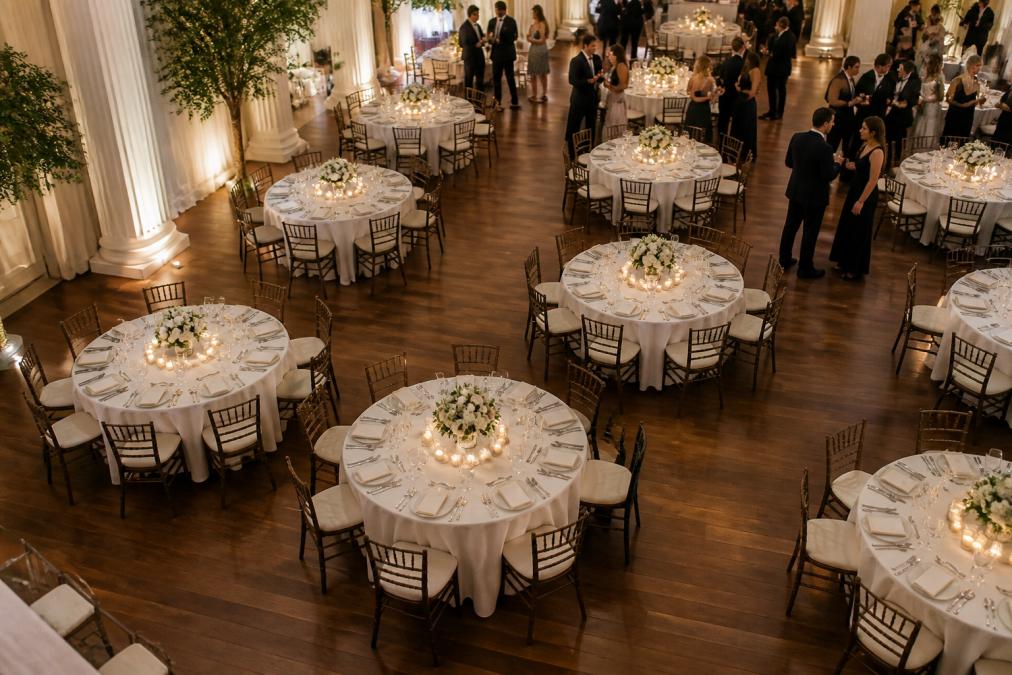
Your table shape and size directly affect the social dynamics of your reception. Round tables seat 8-10 people comfortably and encourage conversation across the entire table. Long banquet tables seat 12-20 people and create a more formal, linear dynamic where people primarily talk to neighbors on either side.
Round tables are ideal for most weddings because they're inherently social, everyone can see and hear everyone else, and there's no "head" of the table. Eight people is the sweet spot for conversation and comfort. More than ten people at a single table makes it difficult for everyone to participate in conversation.
Your reception layout should facilitate traffic flow from the entrance to the dance floor, with clear pathways between tables. Avoid placing tables so close together that servers can't navigate easily or guests feel cramped.
Best Wedding Seating Chart Software and Templates
While you can manage a seating chart on paper or in a spreadsheet, digital tools make the process more efficient and less error-prone. Ever After Suite offers a digital wedding planner that includes seating chart management as part of its 16 interconnected sections. Rather than juggling separate tools for guest list, budget, and seating, everything connects in one system. This approach eliminates the confusion of updating information in multiple places and ensures your guest list and seating assignments stay synchronized.
Using Wedding Seating Chart Templates
If you prefer a template approach, look for options that allow drag-and-drop table assignment or visual table layouts where you can see guest names arranged by table. Templates work well for smaller weddings under 75 guests. For larger weddings with complex dynamics, a more robust system becomes valuable because you need better tools for filtering, sorting, and tracking changes.
Managing Difficult Family Dynamics and Conflict
Family conflict at weddings is real. Siblings who don't speak, in-laws with tension, exes, these situations require a strategic approach to seating.
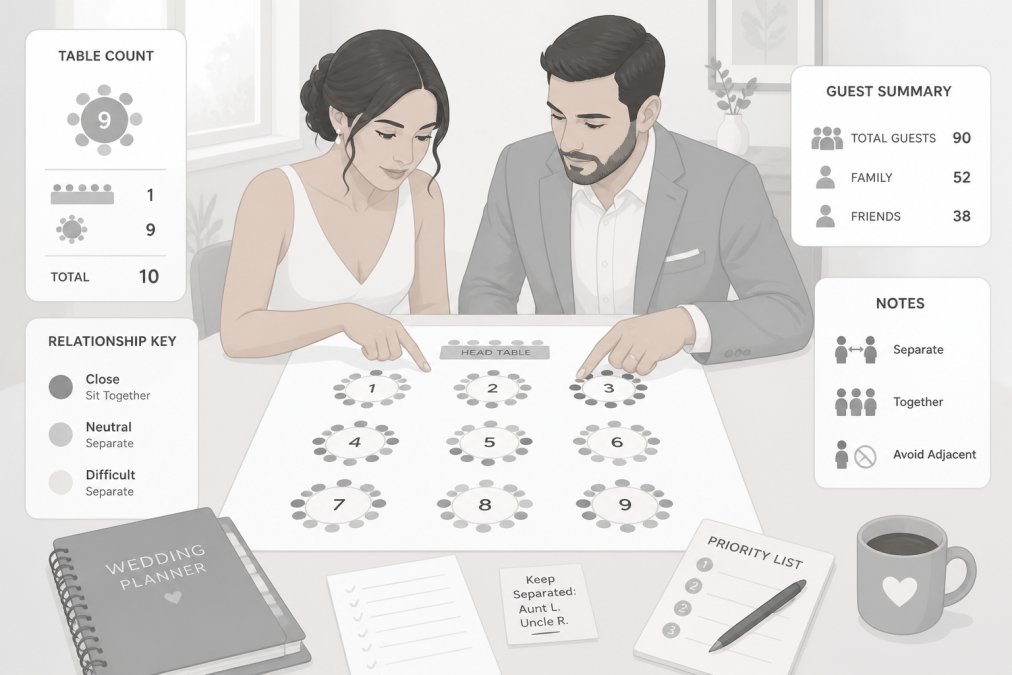
Start by identifying potential conflicts early. Make a list of people who shouldn't sit together or who might create tension if placed near each other. Separate people with known conflicts by placing them at different tables, ideally with at least one table between them.
Talk directly to key family members about seating decisions, especially if you're making unusual choices. A conversation prevents resentment and shows respect for their feelings. For truly difficult dynamics, consider creating a "buffer table" of neutral, easy-going guests who can absorb tension and keep conversation light.
Final Checks Before Your Reception Day
Before you finalize your seating chart, do a thorough review. Print or display your full chart and walk through it systematically.
Check that no one is seated alone or isolated. Look for tables where one guest might feel like an outsider. Verify that dietary restrictions are noted and communicated to your caterer. Review separated family members one more time to confirm divorced parents are at different tables and any other potential conflicts have been addressed.
Check that your seating chart matches your floor plan. Table numbers should correspond to actual table positions in your venue. Share your final seating chart with your venue coordinator and catering manager at least two weeks before the wedding.
Consider creating a backup seating plan in case a guest cancels at the last minute or unexpected plus-ones appear. You don't need to assign every seat, but having a flexible system for accommodating last-minute changes prevents scrambling on the day.
Managing your wedding seating chart doesn't have to be stressful. The process becomes manageable when you use the right tools and approach it systematically. Ever After Suite's digital wedding planner simplifies the entire process by keeping your guest list, seating assignments, and reception details connected in one organized system. With your seating chart finalized and communicated to your venue, you can focus on enjoying your celebration knowing your guests are comfortable and your reception will flow smoothly.
Frequently Asked Questions
When should you finalize your wedding seating chart?
Finalize your seating chart 2-3 weeks before your wedding date, after all RSVPs are in. This gives you time to make adjustments based on confirmed guest counts and any last-minute changes. Avoid finalizing too early, as guest confirmations often shift in the final weeks. Once locked in, communicate the chart to your venue and wedding party so everyone knows their assignments.
What is the standard etiquette for wedding seating arrangements?
Standard wedding seating etiquette places the couple at the head table or sweetheart table, with immediate family and wedding party nearby. Guests are typically seated by relationship or social connection rather than alphabetically. Divorced parents should be separated with other family members between them. Seat single guests near people they know or with other singles to encourage mingling and comfort.
How do you organize a wedding seating chart without causing drama?
Separate guests who have known conflicts, avoid seating divorced or estranged family members together, and strategically place social connectors who can facilitate conversation. Keep the wedding party together for cohesion. Use escort cards or a seating chart display so guests find their assignments independently rather than being directed. Document your decisions so you can explain your reasoning if questions arise.
Should you seat guests by family or by friend group?
A balanced approach works best. Seat immediate family together, but mix extended family and friends to encourage mingling and reduce cliques. Avoid placing all single guests together unless they know each other. Consider seating guests with shared interests or connections to the couple separately from their family group. This strategy improves reception flow, guest comfort, and overall enjoyment.
This article was written using GrandRanker